


SOLUTIONS READILY AVAILABLE
The basic factor in enhancing our energy saving strategies is to identify where the costly electrical
energy is mostly utilized and where the waste of energy can be more effectively managed and reduced.
Welcome to the Solutions Directory.
Effective energy-saving strategies begin by identifying where costly electricity is most heavily used and where waste can best be controlled and reduced.
This technical section presents solutions implemented in members’ properties, mostly contributed through “Share Your Solutions” and “Search for Solutions.”
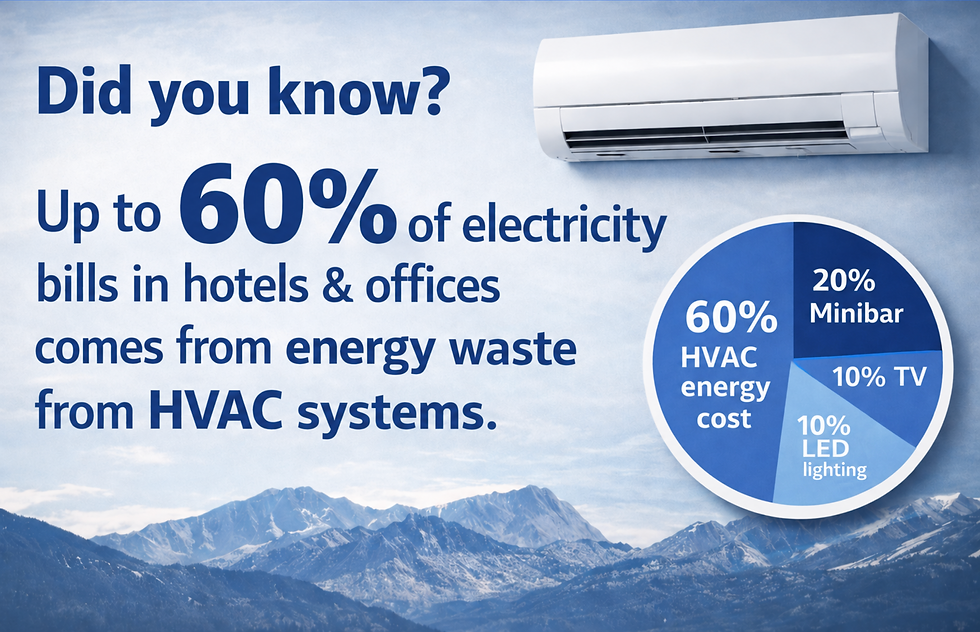
Reduce consumption first!
Air conditioning and heating energy bills are often among the largest energy costs in hotels and commercial buildings: in fact, air compressors, pumps and motors operate almost continuously. Improving HVAC efficiency with "static elimination nets" is a logical step, typically offering maintenance free operations with a ROI within 1–3 years.
Energy generators like photovoltaic panels - which presents a payback period between 5 and 7 years, do not directly reduce energy waste.
Compensating the energy waste from HVAC with solar panels requires roof space, wiring, inverters, batteries and maintenance, while output depends on daylight, weather and available installation area.
The logical strategy is to reduce energy demand first, then generate energy for the remaining consumption. This lowers operating costs, reduces the required solar capacity and improves potential returns.
Solar manufacturing, supply chains and end-of-life recycling, an option not available in many countries, also consume materials and energy.
We shall eliminate energy waste first, especially from inefficient HVAC systems, then buy or generate only the energy that is genuinely needed.
CONTINEWM® Energy Saver for HVAC
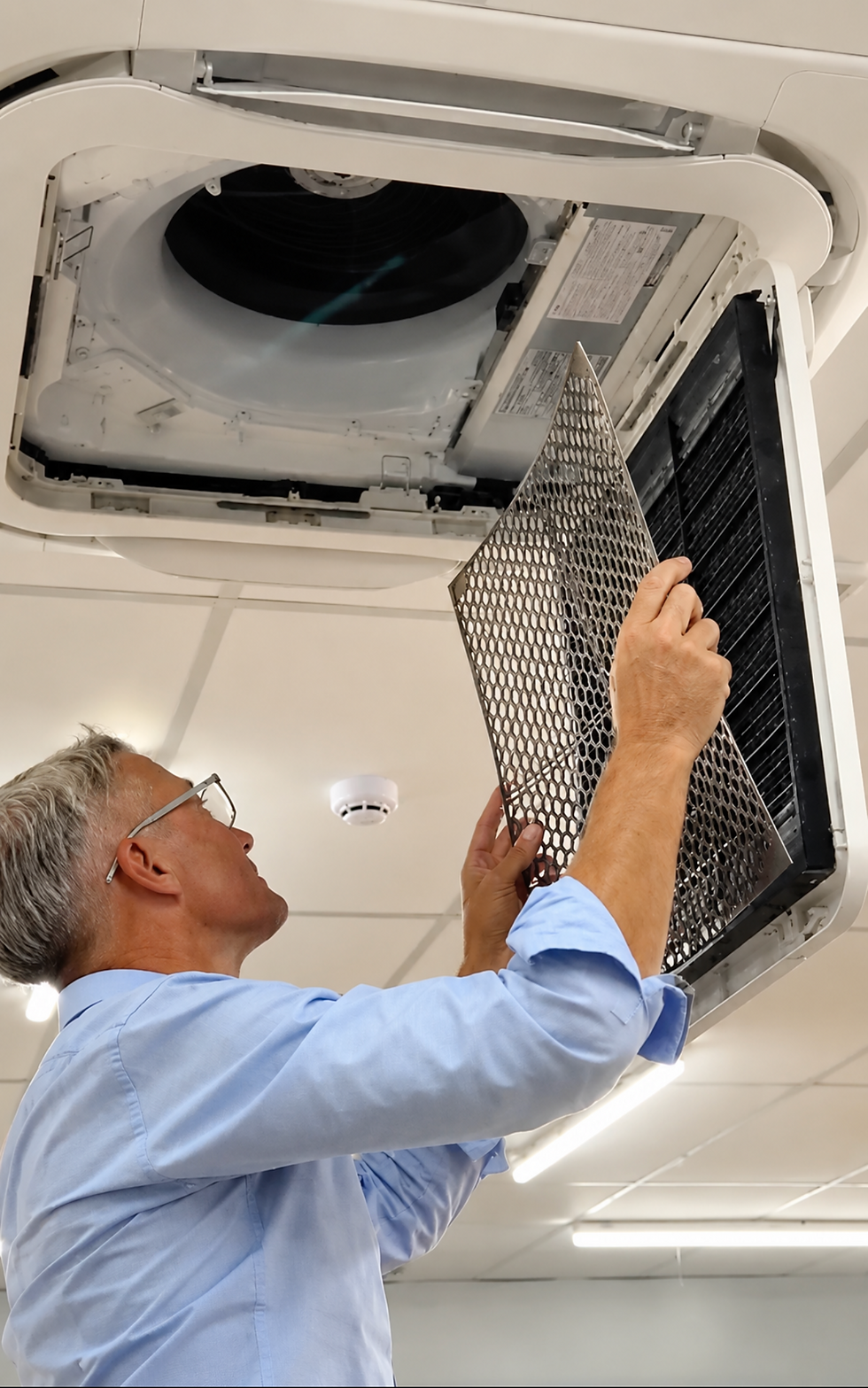
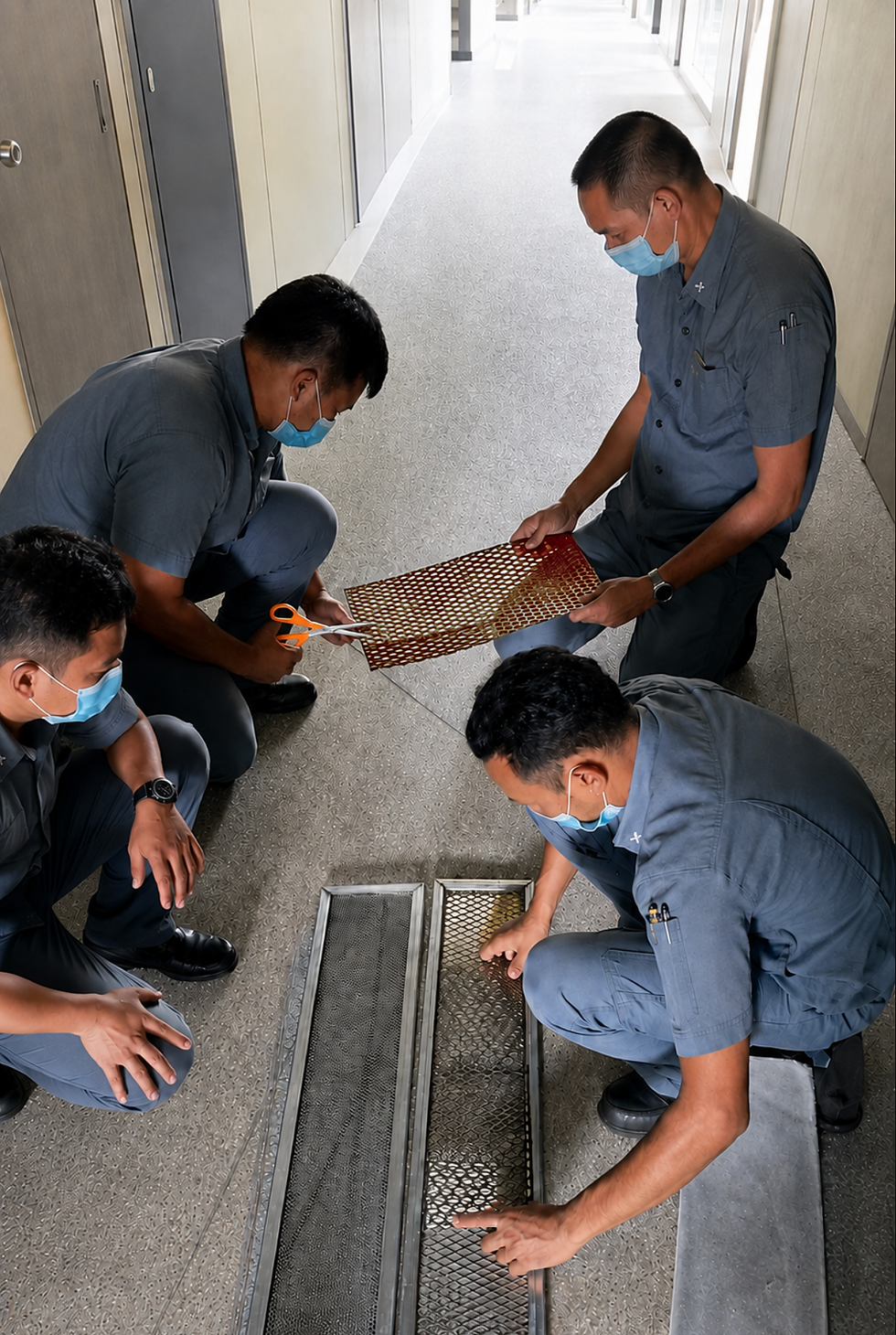
CONTINEWM® Static Elimination Nets is a Japanese HVAC energy-saving, worldwide patented, established product designed to be placed inside any kind of existing air-conditioning units, above the dust filter, without electrical connection or modifications. The Net can be cut to be adapted to the AC filter and optimize in a relevant way the heat exchange and the efficiency of the machine, prolonging its life span and optimizing the functioning of old models and adding a surplus of energy saving to the inverter models.
The energy-saving effect reported by the users of this technology is generally around 20–25% HVAC electricity reduction, and the additional effects are Odor elimination of Durian and other fruits, sewage, sweat, chemical and a proven elimination of PM 2.5 from the indoor air.
The product is utilized in resort groups, ITC Group, Taji Hotels, The Leela, and industrial complexes as TCS, BOSCH, Coca Cola, Amazon, Swarovski, and in Embassies, Universities, and more.
Hotels winners of the past SKÅL Sustainability Awards are ITC Maurya and ITC Royal Bengal which utilize CONTINEWM® Net in their properties.
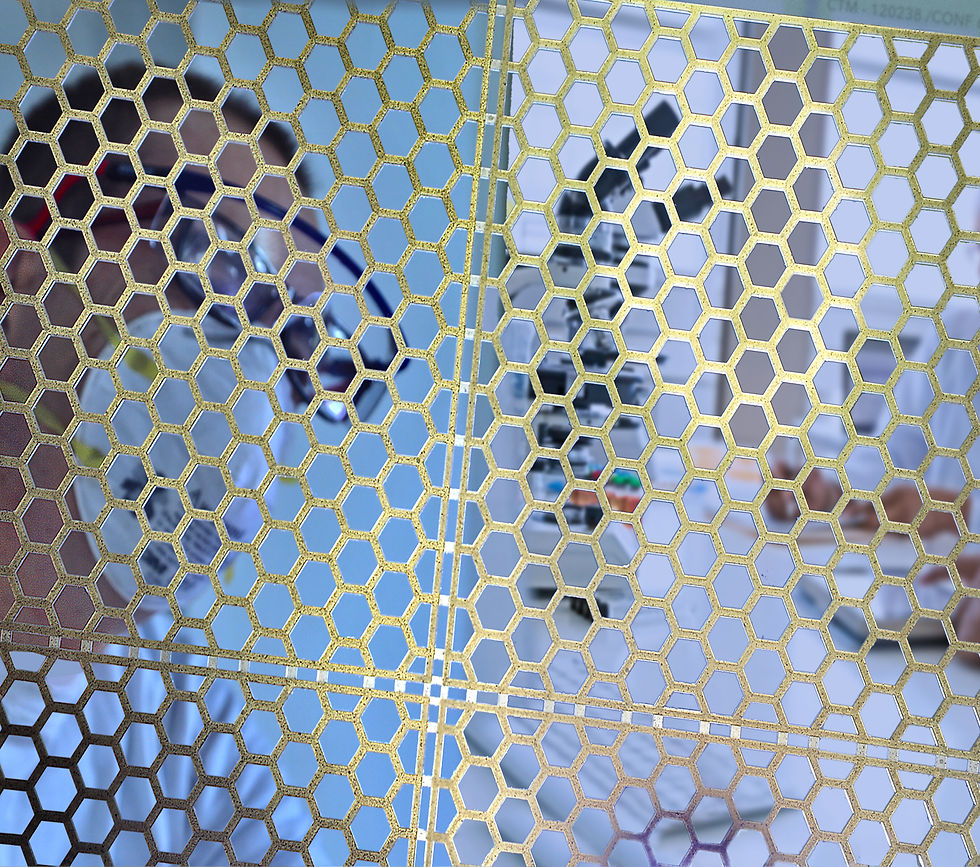
PROS
High HVAC Energy-Saving: CONTINEWM® Nets reduce HVAC energy consumption for both cooling and heating by around 20–25%, with some users reporting results above that range, depending on system conditions and usage.
Easy Installation: The product does not require power shutdown, modification of the air-conditioning system, or specialized manpower, making installation simple and minimally disruptive.
No Electrical Consumption: Unlike active devices, CONTINEWM® Nets do not need electricity to operate, so they do not add any extra power load to the building.
Applicable to All Existing HVAC Systems: They can be retrofitted to existing air-conditioning systems, which makes them suitable for hotels, offices, hospitals, schools, factories, trains, planes, and cruise ships.
Air-Quality Benefits: Additional effects include odor elimination and air purification benefits, including the reduction of PM2.5 particles in indoor environments.
CONS
Savings Depend on HVAC Conditions: Actual savings may vary according to HVAC type, baseline efficiency, climate, usage patterns, occupancy, maintenance condition, and measurement method.
Client Confidentiality: Although CONTINEWM® has numerous clients worldwide, many customers prefer not to publicly share their energy-saving results due to confidentiality, accounting, tax-related reporting, or commercial sensitivity.
Not a Replacement for HVAC Maintenance: CONTINEWM® Nets are not a substitute for proper HVAC maintenance. If filters, coils, refrigerant levels, ductwork, chillers, are poorly maintained, the product alone cannot solve all efficiency issues.
Correct Placement and Verification Required: Although installation is simple, incorrect positioning, unsuitable HVAC layouts, or lack of monitoring may reduce benefits. Proper placement and before/after verification are recommended, especially for large sites.
Results May Differ Between Sites: Performance can vary between properties, even within the same brand or category. A pilot installation or monitored proof of concept is often the best way to evaluate savings before full deployment.
Micro Switches for HVAC
Micro switches for doors and windows are simple electrical components that help reduce energy waste by automatically switching off the HVAC system when a door or window is left open. They are commonly used in hotel rooms, offices, and other air-conditioned spaces where guests or users may forget to turn off the air conditioning manually. When properly installed and maintained, they can offer a low-cost way to prevent unnecessary cooling or heating losses.
PROS
Low Cost: Microswitches are relatively inexpensive compared with many other energy-saving systems.
Easy to Buy in Bulk: They can be purchased in large quantities, making them suitable for hotels or buildings with many rooms.
Automatic HVAC Control: They switch off the HVAC system when doors or windows are open, avoiding the need to switch the AC off manually.
Fast ROI: Because the initial cost is low, the return on investment can be relatively quick.
Simple Technology: They are basic mechanical/electrical devices and do not usually require complex software or advanced controls.
CONS
Frequent Maintenance: Regular checks are needed to keep the switches working properly.
Extra Engineering Work: The engineering team will need additional time to service and inspect all rooms to clean the switches from dirt, oxidation, etc.
Less Suitable for Holiday Resorts: They may be less practical in leisure destinations where guests often keep balcony doors or windows open and they want the AC continue to run.
Installation Modifications: Doors and windows may need to be modified to install the switches correctly.
NO Savings When HVAC Is ON: Microswitches save energy only because they switch OFF the AC; they do not reduce consumption when the HVAC is operating with the room in normal condition.

High Efficiency new kind of LED
High-efficiency LED (Light Emitting Diode) technology uses advanced semiconductor materials and ultra-efficient drivers to convert electricity into light with minimal heat waste. Modern "ultra-efficient" LEDs achieve over 200 lumens per watt (lm/W), cutting energy use by up to 40% compared to standard LEDs and up to 90% compared to old incandescent bulbs.
LED Technologies available: a) Filament LEDs which arranges tiny LED chips along a linear path that mimics the look of vintage Edison bulbs, offering wide-angle light distribution without heavy plastic heat sinks; b) Smart and Tunable LEDs: Embeds microprocessors that allow users to dim, schedule, and change light temperatures (from warm yellow to cool blue), further maximizing energy savings through automated scheduling.

PROS
Low Heat Emission: They remain cool to the touch, which reduces the thermal load on your air conditioning system during hot months.
Instant Full Brightness: Unlike older energy-saving compact fluorescent (CFL) bulbs, modern LEDs achieve 100% brightness the millisecond you flip the switch.
Eco-Friendly Design: They contain zero toxic mercury or hazardous gases, making them completely safe to recycle and friendlier to the planet.
Superior efficacy if compared to old Incandescent bulbs (if anyone still use them):
LED convert nearly 95% of their energy into light rather than heat, radically lowering electricity bills.
Long Lifespan: High-efficiency LEDs can last up to 50,000 hours or more, meaning you will rarely need to replace them over decades.
CONS
Higher Initial Cost: Advanced, ultra-efficient, and smart LED bulbs carry a higher upfront price tag than basic LEDs we already use or old traditional incandescent bulbs.
Dimmer Incompatibility: Many high-efficiency LEDs require specialized and costly electronic dimmers; using them with old manual dimmer switches causes flickering or buzzing.
Blue Light Concerns: Some cool-white LEDs emit high levels of blue light, which can strain your eyes at night and disrupt guests sleep cycle.
Heat Sensitivity: While they emit little heat, their internal components are highly sensitive to trapped ambient heat, causing early failure in enclosed fixtures.
Directional Light Output: LEDs naturally emit light in a single direction, requiring specialized diffusers to spread light evenly across a room without creating harsh shadows.
Window Films
Energy-saving window films are thin, multi-layered laminates applied directly to glass surfaces to improve thermal efficiency. By selectively filtering sunlight, blocking infrared (IR) heat, and reflecting interior radiant heat, they reduce the workload on HVAC systems and can lower daytime cooling costs by up to 15%. The main types of energy-saving films are:
a) Solar Control Films: Best suited to hot climates. They use advanced metallic or ceramic particles to reflect and absorb the sun’s infrared rays, significantly reducing solar heat gain.
b) Low-E (Low-Emissivity) Films: Ideal for mixed and colder climates. They feature a special coating that acts as a thermal shield, reflecting radiant heat back toward its source. This helps keep interiors cooler in summer and retain warmth during winter.
PROS
Lower Utility Bills: Films reduce heat gain in summer and heat loss in winter, lowering the need for air conditioning and heating. Better use in combination with other solutions as energy saving static elimination nets.
UV Protection: Quality films claims to block up to 99% of harmful UV rays, helping protect furniture, wood floors, and artwork from fading.
Glare Reduction: Films soften sunlight, reducing eye strain and making screens easier to view in bright rooms.
Cost-Effective Upgrade: They are cheaper and less disruptive than replacing windows with double or triple glazing.
Maintains Views: Unlike curtains or heavy blinds, solar films keep natural light and outside views while reducing heat.
CONS
Installation and Maintenance Sensitivity: Installation can be delicate and may result in bubbles, or creases, so professional fitting is preferable. If the film is cleaned with unsuitable products, it may scratch, peel, or detach from the glass. In such cases, the affected section may need to be fully removed, the glass perfectly cleaned of adhesive residue, and a new film installed.
Thermal Stress Breakage: Dark or reflective films can absorb heat and may cause thermal cracking on some older or thicker glass.
Reduced Privacy at Night: Reflective films work well by day, but at night indoor lighting can make interiors visible from outside.
Darkened Interiors: Since they block some visible light, films can make rooms slightly darker.
Warranty Risks: Aftermarket films may void the original window manufacturer’s warranty.

Swimming Pools Smart Pumps
Variable-speed pumps are one of the most effective energy-saving upgrades for swimming pools.
Unlike traditional single-speed pumps, which always run at full power, variable-speed pumps can adjust their speed according to the actual filtration or circulation need.
By running more slowly for longer periods, they can filter water efficiently while using much less electricity, often reducing pump energy use by 50–90%.

PROS
Major Energy Savings: They can reduce pool pump energy consumption by 50–90% compared with traditional single-speed pumps.
Lower Operating Costs: Reduced electricity use can save hundreds, or sometimes over a thousand dollars per year, depending on pool size and usage.
Better Filtration: Running at lower speed for longer periods can improve water circulation and filtration quality.
Quieter Operation: At lower speeds, the pump runs much more quietly than standard single-speed models.
Works Well with Automation: They can be combined with timers, sensors, heaters, and pool automation systems to further reduce unnecessary operation.
CONS
Higher Initial Cost: Variable-speed pumps are more expensive to buy and install than basic single-speed pumps.
Longer Payback Period: Although savings can be significant, recovering the upfront cost may take a few years.
More Complex Controls: Programming speeds, schedules, and modes may be confusing for some users at the beginning.
Requires Proper Sizing: If the pump is not correctly sized or programmed, the expected savings may be reduced.
Not Always Necessary: For small pools or pools used occasionally, savings may be less impressive.
Water Spray Nozzles saves energy from your pumps & shower heaters.
Water-saving nozzles, also known as atomizing faucets or micromist aerators, reduce water consumption by turning the normal water flow into a fine mist or vapor-like spray. Instead of producing a steady stream, they mix air and water to create tiny high-speed droplets that provide wide surface coverage while using much less water. They are especially useful for hand-washing, light rinsing, and reducing hot water consumption in homes, hotels, offices, and public bathrooms.

PROS
Massive Water Savings: They can reduce water consumption significantly, in some cases by up to 50–98% compared with standard faucets.
Lower Energy Use: By using less water, they also reduce the energy needed for water pumps and water heating.
Good Surface Coverage: The fine mist spreads over hands or surfaces efficiently, making basic rinsing effective with very little water.
Easy Retrofit: Some aerators, such as atomizing faucet inserts, can be installed on many existing taps without replacing the whole faucet.
Ideal for High-Use Areas: They are particularly useful in hotels, public bathrooms, offices, schools, airports, and commercial buildings where many people wash their hands daily.
CONS
Pressure Dependent: They usually need adequate water pressure, often above 1 bar, to work properly.
Limited for Some Tasks: They are not suitable for quickly filling pots, buckets, or large containers.
Different User Experience: Some users may feel that mist or vapor flow is unusual compared with a normal water stream.
Possible Maintenance Needs: Fine nozzles can clog more easily in areas with hard water, sediment, or poor water quality.
Not Always Suitable for Kitchens: They may work well for hand-washing and light rinsing, but may be less practical for heavy dishwashing or food preparation tasks that require stronger flow.
Sponsor a Project
This is the space to introduce visitors to the business or brand. Briefly explain who's behind it, what it does and what makes it unique. Share its core values and what this site has to offer.

Planting Trees to Restore Ecosystems
Help us grow
Your donations fuel our mission to combat climate change and make our planet greener